

Himalaya Harbinger, Uttarakhand Bureau
Pantnagar. The State Government of Uttarakhand is preparing a comprehensive “Uttarakhand Agriculture Roadmap” to define the direction of development in agriculture, horticulture, animal husbandry and allied sectors for the next 20 years. The preliminary draft of the roadmap is targeted to be prepared within the next three months. Separate priorities will be identified for all 13 districts of the state based on their geographical, climatic and socio-economic conditions.
The ambitious initiative is being led by Dr. S.N. Pandey, Secretary, Agriculture, Government of Uttarakhand, while Dr. Shivendra Kumar Kashyap, Vice Chancellor, Govind Ballabh Pant University of Agriculture and Technology, Pantnagar has been entrusted with the responsibility of Coordinator for the Uttarakhand Agriculture Roadmap.
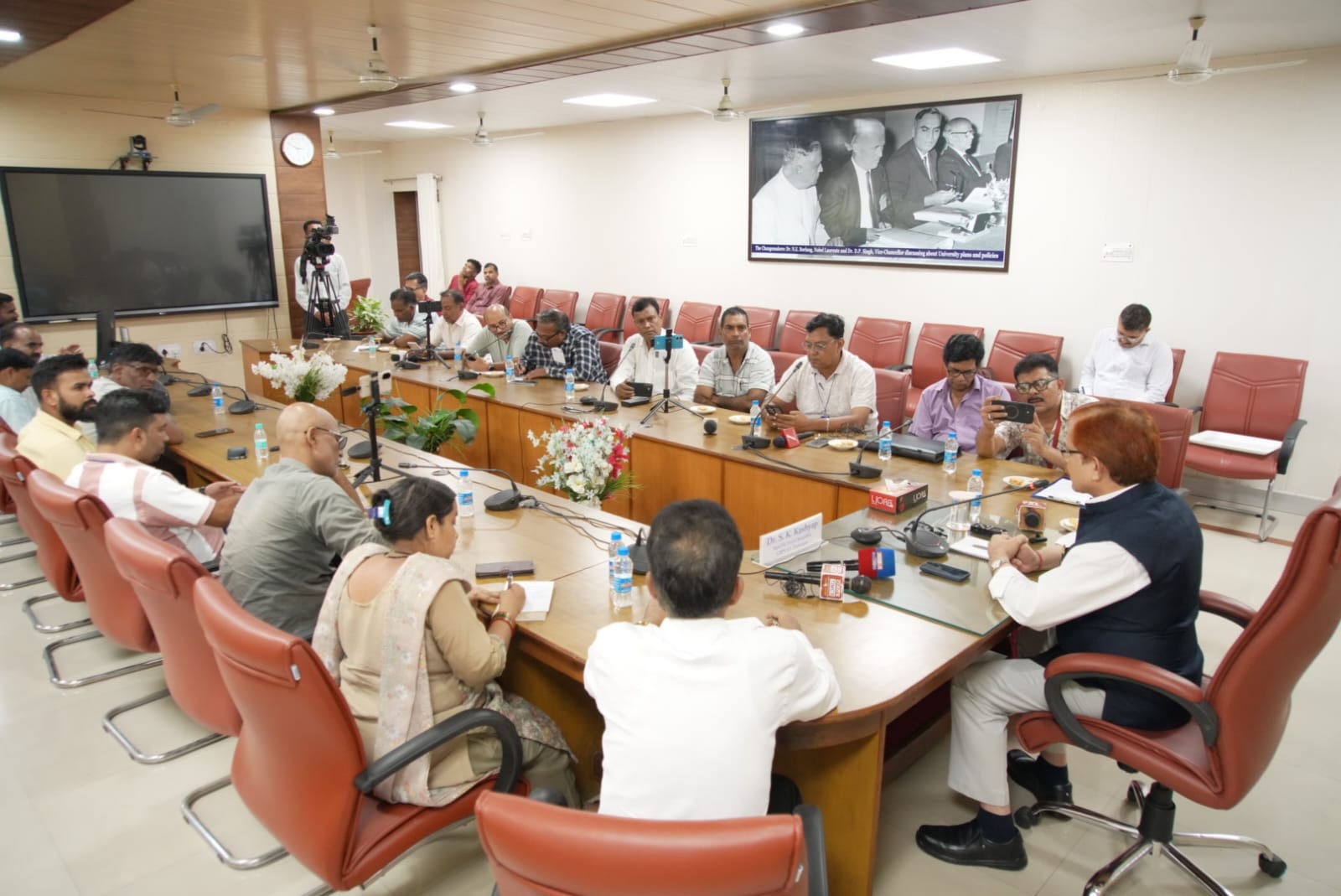
Addressing a press conference held at Vice-Chancellor Conference Room-2 of the University, Vice Chancellor Dr. Shivendra Kumar Kashyap said that the objective of this initiative is to provide a new direction to Uttarakhand’s agriculture and allied economy for the next 20 years through practical, implementable and measurable targets. For this purpose, expert committees will work on 21 thematic areas, including agriculture, horticulture, animal husbandry, forestry, climate change, biodiversity, migration and employment generation. He informed that nearly 170 experts and representatives from across the country and abroad participated online in the initial programme for preparing the roadmap and shared their views on the future direction of agricultural development in Uttarakhand. To bring together the suggestions and work of all committees and experts on a common platform, the University has developed a digital dashboard. All teams will share their work and recommendations through this dashboard, enabling them to review each other’s progress and work in a coordinated manner to prepare the preliminary draft of the Agriculture Roadmap within three months. The Vice Chancellor said that the most important feature of the roadmap would be its district-wise and region-specific approach. A separate strategy will be developed according to the needs of the hilly regions, while food-grain productivity, agricultural processing and value addition will be given priority in the Terai and plain areas. Region-wise action plans will also be prepared for districts such as Dehradun and Nainital, which have a mixed geographical character. He said that after assessing the existing baseline conditions of each district, measurable targets for the years 2031, 2036, 2041 and 2046 will be established. In the high Himalayan districts, special emphasis will be placed on temperate horticulture, medicinal and aromatic plants, biodiversity conservation and agri-tourism. The roadmap will also give priority to addressing migration from the hilly regions, bringing barren and fallow land back into productive use, and creating new employment opportunities at the local level. Dr. Kashyap said that the Agriculture Roadmap aims to develop a balanced and sustainable agricultural development model by taking into account the specific requirements of both the hilly and plain regions of the state.
Dr. Kashyap further informed that successful agricultural development models of countries such as New Zealand, Ireland and China are also being studied while preparing the roadmap. However, the model developed for Uttarakhand will be based on the state’s own geographical, climatic and socio-economic conditions. Suggestions from farmers, elected representatives, various departments of the state government, academic institutions, and national and international experts will also be incorporated. He said that the Uttarakhand Agriculture Roadmap will not be limited merely to increasing agricultural production, but will also focus on improving farmers’ income, generating employment, promoting agri-entrepreneurship, processing and value addition, and strengthening the rural economy, thereby accelerating the overall and balanced development of the state. Director Communication Dr. J.P. Jaiswal, Assistant Director Communication Dr. Arpita Sharma Kandpal and members of the media were present on the occasion.
