





Himalaya Harbinger, Rudrapur Bureau
_Pantnagar, _Six improved varieties of six different crops developed by the scientists of G.B. Pant University of Agriculture and Technology (GBPUAT), Pantnagar, have been approved for cultivation under various agro-climatic conditions of Uttarakhand. The approval was granted during the 16th meeting of the Uttarakhand State Seed Sub-Committee held in Dehradun under the chairmanship of Secretary, Agriculture and Farmers’ Welfare, Uttarakhand, Dr. Surendra Narayan Pandey.
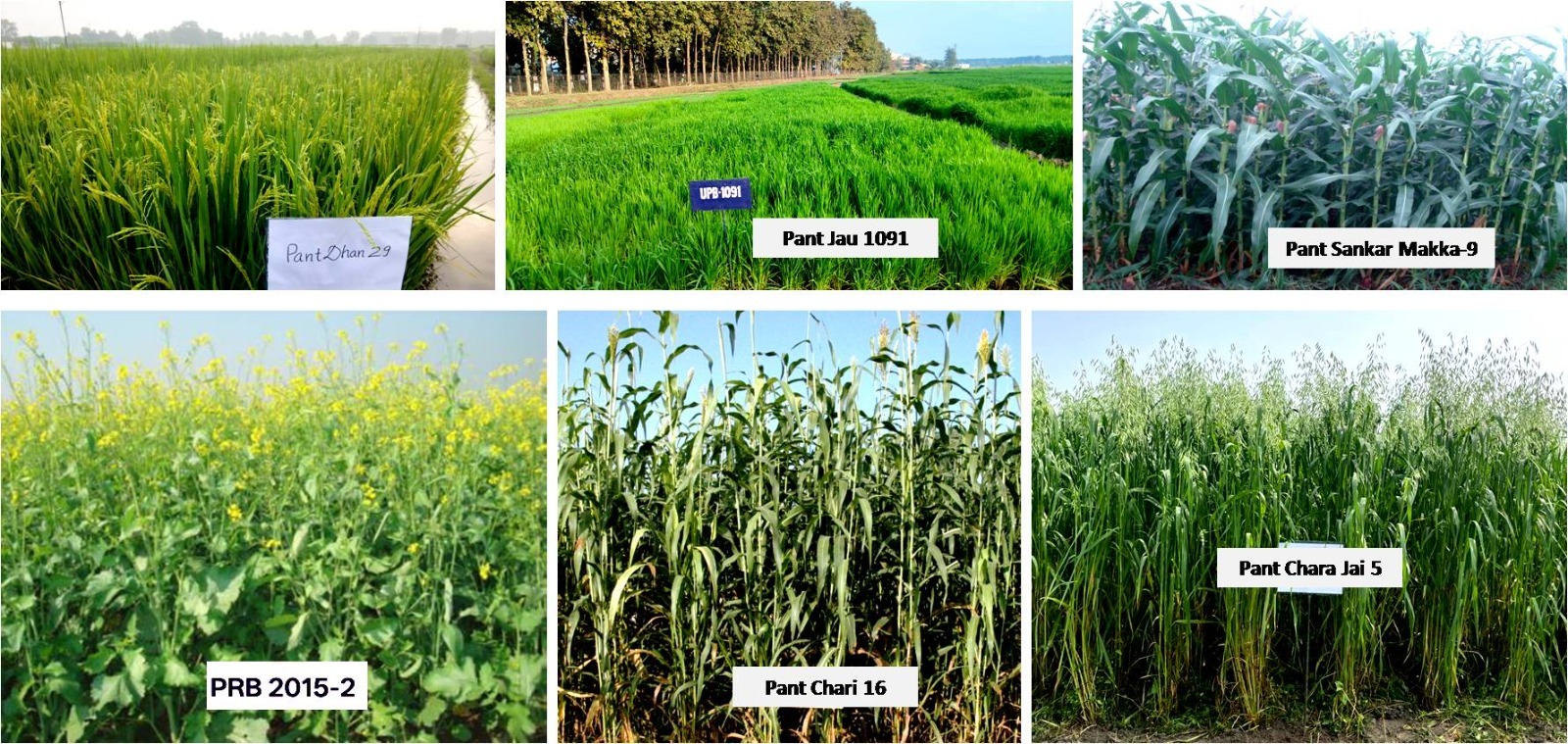
The approved varieties include Pant Dhan-29 of Rice; Pant Jau-1091 (UPB-1091) of barley; Pant Hybrid Maize-9 (DH-353) of Maize; PRB-2015-2 of Indian Mustard; Pant Chari-16 (UTFS-121) of Fodder Sorghum and Pant Forage Oat-5 (UPO-16-4) of Oat.
Pant Dhan-29 is a dwarf, high-yielding, short-duration rice variety that matures in approximately 115 days and has an average yield potential of 50 quintals per hectare. Its short maturity duration also helps the crop escape prolonged exposure to pest and disease infestation. Pant Jau-1091 has been approved for the cultivation in the hill regions of Uttarakhand. In trials conducted over the past three years, the variety recorded 21.98 percent, 8.36 percent and 5.87 percent higher yields than the existing varieties UPB-1008, VLB-130 and VLB-118, respectively. Its yield potential in the hill regions was recorded at 38.16 quintals per hectare. The variety is resistant to rust and covered smut diseases. Pant Hybrid Maize-9 is a single-cross hybrid approved for cultivation in the plains of Uttarakhand. Its yield potential was recorded at 84.85 quintals per hectare during the kharif season and 92.13 quintals per hectare during the spring season. In state-level trials, it recorded a yield of 64.30 quintals per hectare. The hybrid is medium in height, has a strong stem, compact cobs and well-developed orange-yellow coloured flint kernels. The Indian mustard variety PRB-2015-2 recorded 15.55 percent and 12.95 percent higher yields than the check varieties PR-20 and Kranti, respectively in state-level trials. It is a medium-duration variety that matures in approximately 134 days and contains 40.8 percent oil. The variety is resistant to major diseases and insect pests. The fodder sorghum variety Pant Chari-16 is a single-cut fodder sorghum variety with an average green fodder yield of 828.35 quintals per hectare and dry fodder yield of 124.33 quintals per hectare. Harvesting at the 50 percent flowering stage provides high-quality fodder. The variety is resistant to foliar diseases. The oat variety Pant Forage Oat-5 recorded an average green fodder yield of 599.48 quintals per hectare and dry fodder yield of 131.76 quintals per hectare. Its fodder is of high quality as it contains relatively low levels of both Neutral Detergent Fibre (NDF) and Acid Detergent Fibre (ADF). The variety is also resistant to diseases.
The development of these improved varieties involved the significant contribution of several university scientists. The rice variety was developed by rice breeders Dr. Indra Dev and Dr. D.C. Baskheti; the barley variety by Dr. J.P. Jaiswal, Dr. Swati Prashant and Dr. Anil Kumar; the maize variety by Dr. N.K. Singh; the oilseed variety by Dr. Usha Pant, Dr. Ram Bhajan and Dr. A.K. Singh; the sorghum variety by Dr. P.K. Pandey, Dr. P.K. Shrotriya and Dr. Shiv Ji Singh; and the oat variety by Dr. Birendra Prasad.
Head of the Department of Genetics and Plant Breeding Dr. J.P. Jaiswal, Dean of Agriculture Dr. Anil Shukla and Director Research Dr. S.K. Verma congratulated all the scientists for their contribution towards the development of these varieties. Vice-Chancellor Dr. Shivendra Kumar Kashyap expressed his happiness over the approval of six improved varieties of six different crops for cultivation in Uttarakhand and congratulated the scientists on the achievement. He said that the approval of varieties of food and oil seed crops along with two fodder crops is a significant achievement for the university. These improved varieties, he added, will help enhance food grain, oil and fodder production in the state and contribute significantly towards increasing farmers’ income.
