




Himalaya Harbinger, Uttarakhand Bureau
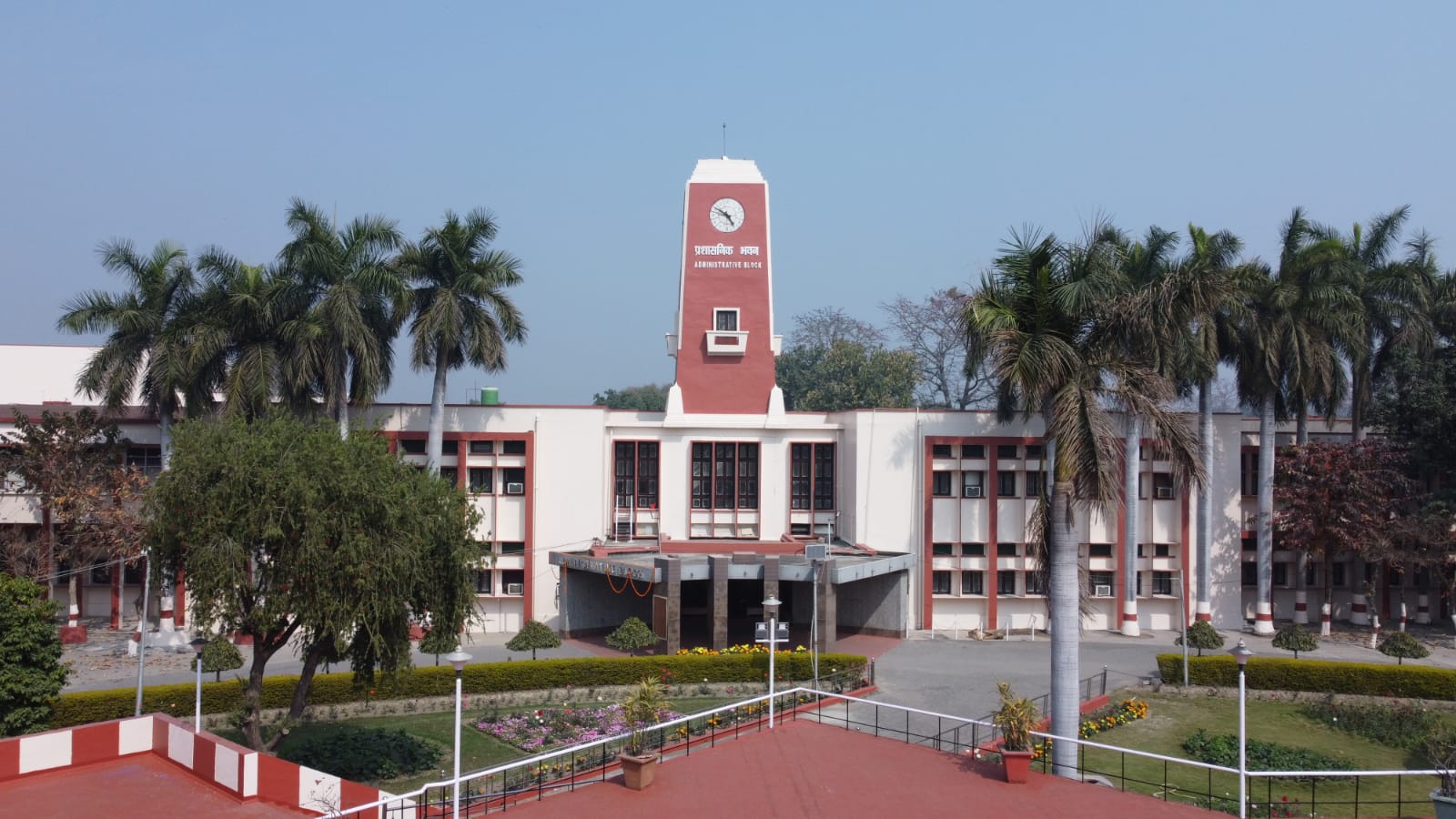
PANTNAGAR: Long before precision agriculture, conservation farming and climate-smart agriculture became global priorities, agricultural engineer and ICAR National Professor Prof. T. C. Thakur was developing farm machinery and soil management technologies at Govind Ballabh Pant University of Agriculture and Technology (GBPUAT), Pantnagar, that addressed many of the challenges confronting agriculture today—from declining soil health and water scarcity to inefficient fertilizer use and rising cultivation costs.
Healthy crops depend on healthy soil, yet soil compaction remains one of the least visible constraints on agricultural productivity. Compacted soil restricts root growth, reduces water infiltration, limits nutrient uptake and ultimately lowers crop yields. Farmers often respond by increasing irrigation and fertilizer use, raising production costs without proportionate gains.
Working in the Department of Farm Machinery and Power Engineering at GBPUAT’s College of Technology, Prof. Thakur combined soil mechanics, crop physiology and mechanical engineering to develop technologies aimed at improving soil health, enhancing resource-use efficiency and reducing cultivation costs. His research demonstrated that agricultural engineering delivers its greatest value when it solves practical problems faced by farmers.
Among his most significant innovations was the Pant Winged Subsoiler, designed to break subsurface soil compaction without excessive disturbance of the soil profile. Unlike conventional tillage implements that invert large volumes of soil, the machine fractured compacted layers beneath the surface, improving water infiltration, encouraging deeper root development and enhancing the soil’s moisture-holding capacity.
These engineering principles closely resemble practices now associated with climate-resilient agriculture, where stronger root systems enable crops to utilize water and nutrients more efficiently while improving resilience during periods of water stress.
Prof. Thakur also introduced innovations in nutrient management through the Subsoiler-Cum-Differential Rate Fertilizer Applicator, which combined deep tillage with localized fertilizer placement. By delivering nutrients closer to the active root zone instead of broadcasting them across the field, the technology improved fertilizer-use efficiency, reduced nutrient losses and lowered production costs while minimizing environmental impacts.
Today, localized nutrient application is widely recognized as an important component of precision agriculture, although Prof. Thakur demonstrated these principles decades before the concept became mainstream.
Recognizing the importance of conserving soil and energy, his team developed an Improved Conservation Tillage Machine that enabled reduced soil disturbance while retaining crop residues on the field. Conservation tillage helps reduce soil erosion, conserve moisture, improve biological activity and lower fuel consumption—benefits that are now integral to sustainable agricultural production.
His work also addressed the needs of small and marginal farmers. The Animal Drawn Multipurpose Tillage Device enabled multiple field operations with a single implement, reducing labour and operational costs. For hill agriculture, the Pant–ICAR Animal Drawn Six-in-One Tillage Outfit was specifically designed for fragmented and uneven Himalayan farms where conventional machinery is often impractical.
Although Prof. Thakur secured several patents in agricultural machinery, colleagues say his larger contribution lay in promoting a research philosophy that placed farmers’ needs at the centre of technological innovation. His emphasis on validating engineering solutions under real field conditions helped bridge the gap between laboratory research and farm adoption.
His work also contributed significantly to establishing GBPUAT’s Department of Farm Machinery and Power Engineering as a leading centre for agricultural mechanization research by integrating engineering with soil science, agronomy and crop production.
Many of the issues that dominate agricultural policy today—including declining soil health, climate variability, water-use efficiency and sustainable intensification—were recurring themes in Prof. Thakur’s research several decades ago. His work consistently emphasized efficient use of water, nutrients and energy while strengthening the long-term sustainability of farming systems.
Prof. Shivendra Kumar Kashyap, Vice-Chancellor of GBPUAT, said Prof. Thakur’s work illustrates how scientific innovation rooted in farmers’ needs can remain relevant across generations. “Many of the engineering principles he developed decades ago—improving soil health, enhancing resource-use efficiency and reducing production costs—align closely with today’s priorities of climate resilience and sustainable agriculture. At GBPUAT, we are building upon this legacy by integrating precision agriculture, digital technologies and intelligent farm mechanization to develop practical, affordable and science-based solutions for Indian farmers,” he said.
The university continues to expand research in precision agriculture, intelligent farm machinery, automation and digital technologies, building upon the foundation laid by Prof. Thakur while adapting engineering innovations to India’s diverse agro-climatic conditions.
As agriculture enters an era increasingly shaped by artificial intelligence, robotics and data-driven farming, Prof. Thakur’s work underscores a principle that remains relevant: technological innovation achieves its greatest impact when it conserves natural resources, addresses real farming challenges and improves farmers’ livelihoods.
