
Himalaya Harbinger, Uttarakhand Bureau
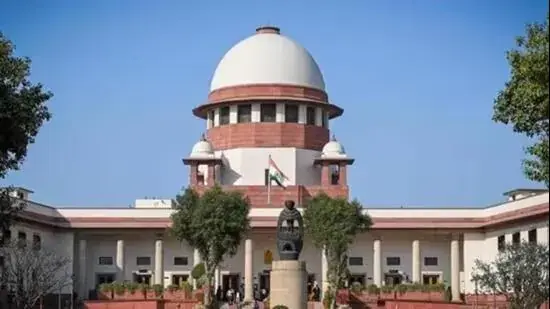
New Delhi: The Supreme Court (SC) on Thursday stayed the operation of the University Grants Commission’s (UGC) 2026 equity regulations, warning that the new framework was capable of dividing society and could have “dangerous impacts” if misused
The court directed that the UGC’s 2012 anti-discrimination regulations will continue to operate for the present to ensure that complainants are not left without remedies.
A bench of Chief Justice of India (CJI) Surya Kant and Justice Joymalya Bagchi also issued notice to the Union government and the UGC, seeking their responses to three petitions challenging the constitutional validity of the University Grants Commission (Promotion of Equity in Higher Education Institutions) Regulations, 2026.
The matters have been listed for further hearing on March 19.
Hearing the petitions, the bench said that “unity of India must be reflected in the institutions of India” and cautioned that the impugned regulations, far from fostering inclusion, were vulnerable to exploitation and could result in regressive outcomes.
These regulations will have serious consequences. They are capable of dividing society and will lead to dangerous impacts,” the bench observed, describing the framework as “vague and omnibus” and flagging multiple provisions that were susceptible to misuse.
“We wanted to create a free, fair, equitable and inclusive atmosphere in universities. But when we look at these provisions, there are four or five serious issues,” the court said, adding that important concerns such as ragging did not appear to have been adequately addressed.
The hearing unfolded amid a wider national debate over the UGC’s newly notified equity regulations, which mandate the establishment of equal opportunity centres and equity committees in universities, colleges and deemed institutions to address complaints of discrimination.
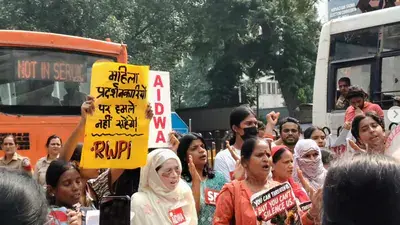
The framework traces its origins to an August 2019 petition before the Supreme Court seeking stronger anti-discrimination safeguards in higher education. While the regulations have been welcomed by marginalised student groups, they have drawn opposition from several upper-caste organisations and students, who argue that the provisions are vaguely worded and open to misuse.
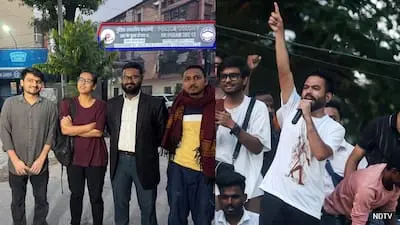
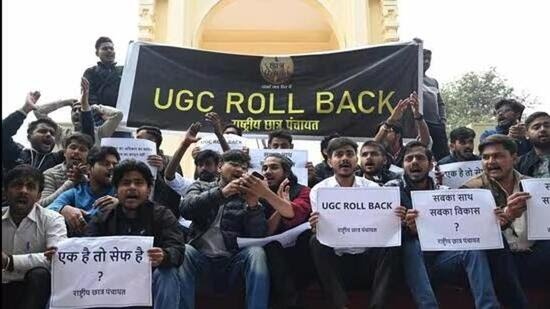
Earlier this week, a group of upper-caste students protested outside the UGC headquarters in Delhi, demanding a rollback of the rules. Union education minister Dharmendra Pradhan has sought to allay concerns, saying no one would face harassment and that the regulations would not be misused in the name of discrimination.
The petitions were filed by social activist Rahul Dewan, post-doctoral researcher Mrityunjay Tiwari and advocate Vineet Jindal. A key challenge is to Regulation 3(c), which defines “caste-based discrimination” as discrimination “only on the basis of caste or tribe” against members of the Scheduled Castes (SCs), Scheduled Tribes (STs) and Other Backward Classes (OBCs).
Appearing for Dewan, advocate Vishnu Shankar Jain argued that the provision excludes members of the general category from protection, despite the regulations otherwise adopting a broad definition of discrimination. He submitted that once discrimination is defined inclusively under Regulation 3(e), there was no intelligible differentia to justify a narrower caste-based definition, rendering it violative of Article 14.
While clarifying that it was examining the issue “at the threshold of constitutionality”, the bench repeatedly flagged concerns of exclusion. It posed a hypothetical on regional discrimination, asking how the regulations would address humiliating remarks directed at students without reference to caste, such as those based on region, language or appearance.
Advocate Neeraj Singh, appearing for Tiwari, cautioned against reverse victimisation under the framework. He cited the example of a senior belonging to a scheduled caste community ragging a junior from the general category, submitting that the junior could face counter-allegations and exposure to proceedings under the SC/ST (Prevention of Atrocities) Act. He also pointed out that ragging was not specifically defined in the regulations.
Reflecting on India’s constitutional journey, the bench questioned whether the framework marked a step backwards. “Whatever we have developed in the last 75 years towards a casteless society, are we now moving towards a regressive society?” it asked, while expressing strong reservations about measures such as segregated hostels.
Referring to the UGC’s 2012 framework, the court asked why a progressive policy had narrowed protections. “If the 2012 framework talked about an all-inclusive definition, why should there be regression?” the bench observed, invoking the principle of non-regression in social justice laws.
Staying the 2026 regulations, the court directed that the 2012 framework would continue in force and issued notice to the Centre and the UGC, clarifying that the interim arrangement was necessary to prevent complainants from being left remediless while the constitutional challenge is examined.
