



Himalaya Harbinger, Uttarakhand Bureau
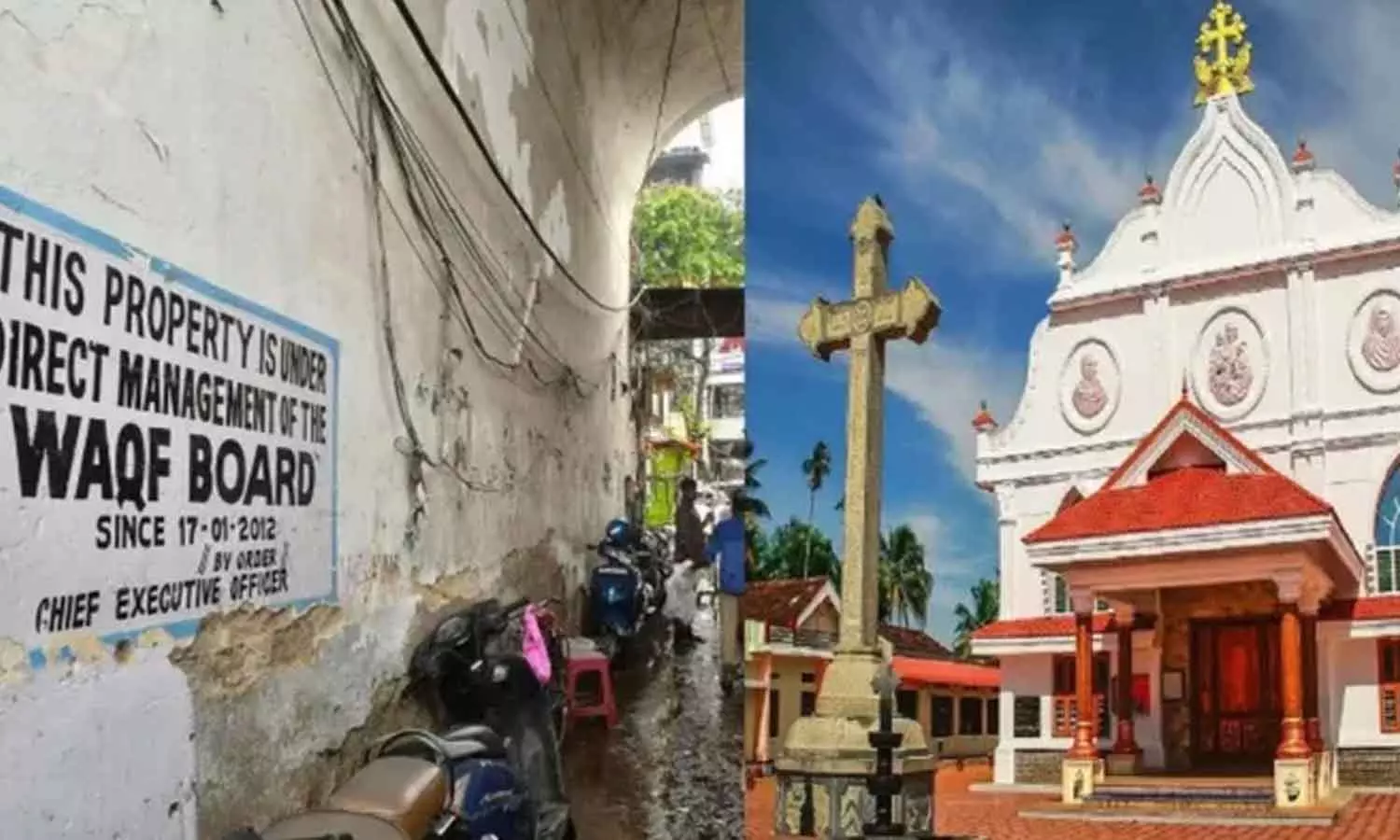
Amid the Waqf row, RSS mouthpiece Organiser had pulled down a recent article which claimed that it is not the Waqf Board but the Catholic church that is the largest landholder in the country. The article ‘Who has more land in India? The Catholic Church vs Waqf Board Debate’ was published on April 3. However, the article was withdrawn as the Opposition criticised that after Muslims, the Bharatiya Janata Party (BJP) is set to go after Christians. Below is the full text of the article on the website of the Organiser, which has now been removed
Who has more land in India? The Catholic Church vs. Waqf Board debate
According to the Government Land Information website, as of February 2021, the Indian government owned approximately 15,531 square kilometers of land, which was distributed among 116 public sector companies and 51 ministries. While the Waqf Board does own significant land parcels across various states, it does not surpass the holdings of the catholic church in India.
For many years, there has been a common belief that the Waqf Board is the second-largest landowner in India after the government. However, this claim does not align with the actual data on land ownership in the country The Catholic Church of India holds the distinction of being the largest non-
Government and Church land loldings According to the Government Land Information website, as of February 2021, the Indian government owned approximately 15,531 square kilometers of land, which was distributed among 116 public sector companies and 51 ministries. While the Waqf Board does own significant land parcels across various states, it does not surpass the holding of the Catholic church in India. Reports suggest that the Catholic Church of India owns around 7 crore hectares (17.29 crore acres) of land throughout the country. This land hosts numerous institutions, including churches, schools, colleges, and hospitals. The total estimated value of these properties is around Rs 20,000 crore, making the Church a significant player in India’s real estate landscape.
Educational and Healthcare institutions
under the Church
The Catholic Church has holdings in the fields of education and healthcare in India. As of 2012, Church-run institutions included:
2,457 hospital dispensaries
. 240 medical or nursing colleges
. 28 general colleges
5 engineering colleges
3,765 secondary schools
7,319 primary schools
. 3,187 nursery schools
These institutions have contributed significantly to India’s social development, particularly in remote and undeserved areas.
Legal disputes and controversies
LIVE
98
Despite its vast holdings, the Catholic Church’s land ownership has been the subject of legal scrutiny and public debate. A major point of contention is whether some of the land was obtained through questionable means. There have been frequent allegations that Church authorities acquired land by exerting undue influence, particularly during the colonial era.
In 1965, the Indian government issued a circular stating that any land granted on lease by the British government would no longer be recognised as Church property. However, due to lax enforcement of this directive, the legitimacy of certain Church-owned lands remains
unresolved, leading to ongoing disputes. While the catholic church continues to maintain ownership of these vast lands, the question of land legitimacy is likely to persist as legal and administrative debates unfold.
Land Acquisition and Religious
Conversions
LIVE
98
Beyond education and healthcare, missionary institutions have often been accused of using these services as tools for religious conversion. Many reports suggest that Church-run schools and hospitals lure economically disadvantaged individuals by providing free or low-cost services and, in turn, pressure them to convert to Christianity. Several instances have emerged where landowners from tribal and rural communities were encouraged—or in some cases coerced – into converting to Christianity, after which their lands were taken over by Church-affliated organisations. This issue has been a matter of intense debate, with critics arguing that such activities exploit vulnerable populations under the guise of social welfare. While the Church denies these allegations, multiple cases of illegal land acquisitions linked to conversion activities have surfaced in various states, fueling concerns about the role of missionary institutions in India’s socio-religion landscape.
Missionary organisations strategically establish educational and medical institutions in regions with economically weaker and tribal populations. These institutions, while initially appearing to offer free or subsidised services, often integrate religious teachings into their curricula and hospital environments, subtly influencing beneficiaries towards Christianity. Over time, many individuals, having received prolonged support from these institutions, find themselves pressured-either through social persuasion or economic dependency-to convert. Additionally, several cases have surfaced where tribal lands, once belonging to indigenous communities, were gradually transferred to Church authorities under various pretexts. This systematic approach has led to widespread concerns about cultural erosion and loss of traditional identities in many regions.