




Himalaya Harbinger, Uttarakhand Bureau.
Pantnagar. The two-day 3rd National Consultative Workshop on ‘Boosting Research, Academics, Innovation and Networking (BRAIN 3.0)’ concluded successfully with a valedictory session at Govind Ballabh Pant University of Agriculture and Technology, Pantnagar. During the workshop, a comprehensive roadmap was formulated to provide new direction to the University’s future initiatives in research, education, innovation, and industry-academia collaboration.
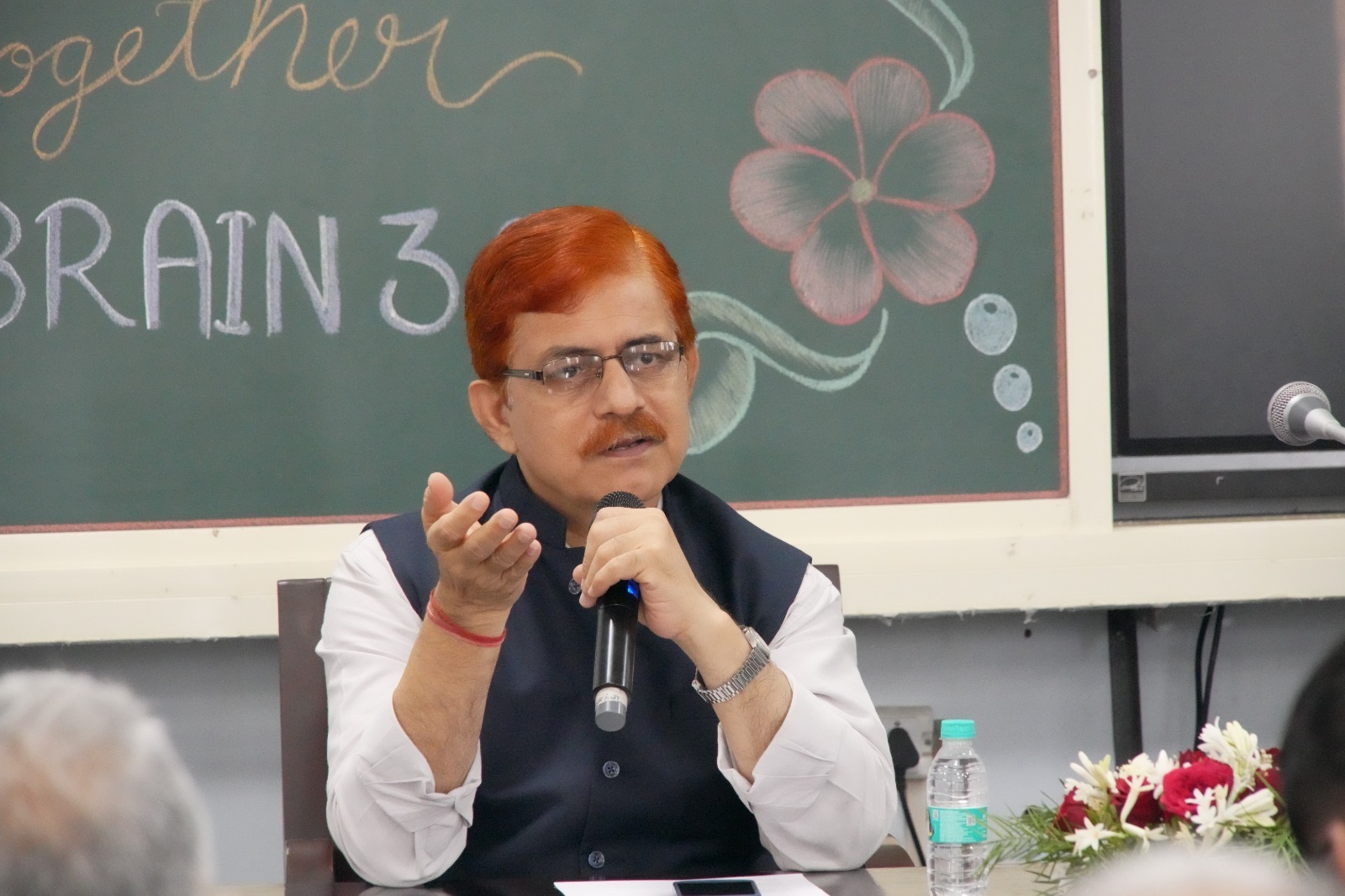
The Chief Guest of the valedictory session was Dr. A.N. Mukhopadhyay, former Dean, College of Agriculture, G.B. Pant University of Agriculture and Technology, Pantnagar and former Vice-Chancellor of Assam Agricultural University. Congratulating the University administration, the organizing committee, and all participating alumni on the successful and impactful organization of BRAIN 3.0, he expressed confidence that the University would continue to receive the active support and valuable guidance of its alumni in the future, further strengthening its academic, research, and innovation activities. Dr. Mukhopadhyay also appreciated the leadership of Vice-Chancellor Prof. Shivendra Kumar Kashyap expressing confidence that under his dynamic leadership and visionary approach, the University would achieve new milestones in education, research, innovation, and agricultural development while continuing its journey of excellence.
During the two-day deliberations, various thematic groups presented their action plans and offered several practical and future-oriented recommendations aimed at establishing the University as a leading national and global institution for agricultural research, innovation, and technological advancement. Experts emphasized the adoption of Artificial Intelligence, precision farming, sensor-based irrigation systems, digital agriculture, hydroponics, carbon farming, carbon credit mechanisms, carbon emission mapping, soil testing, weather-based decision support systems, and predictive models for crop disease forecasting.
The workshop also witnessed extensive discussions on strengthening the horticulture sector. Experts highlighted the need to establish high-quality nurseries in Uttarakhand, promote large-scale production of quality planting material and provide technological support for fruit and vegetable cultivation. Participants also recommended developing innovation centres in collaboration with the industries and institutional partners to facilitate the commercialization of agricultural technologies. Student mentoring for entrepreneurship, motivation for health consciousness.
Experts further stressed the importance of promoting research in maize silage, Napier grass, energy crops, and waste-to-energy technologies utilizing agricultural residues. They also advocated the development of farmer-participatory research models to ensure wider adoption of innovative technologies.
The alumni emphasized aligning the University’s research with industry requirements, encouraging agriculture-based startups, and formulating long-term strategies for technology commercialization. The workshop recommended establishing a Research Help Desk, Innovation Cell, AI and Data Centre, Technology Transfer System, and strengthening industry-academia partnerships. Participants also agreed on enhancing mentorship, internships, startup support and entrepreneurship development programmes by strengthening the University’s alumni network.
Detailed discussions were also held on carbon credit policies, revolving funds, project-based funding mechanisms, agri-business models, digital platforms, weather-based agricultural advisory services, and the development of AI-enabled technologies to address farmers’ challenges.
Addressing the valedictory session, Vice-Chancellor Prof. Shivendra Kumar Kashyap stated that BRAIN 3.0 was not merely a platform for discussions but a significant initiative to shape the future direction of the University. He remarked that the combined strengths of alumni experience, industry participation, and the University’s scientific expertise would play a pivotal role in delivering innovative agricultural technologies to farmers. He expressed confidence that the recommendations emerging from the workshop would provide fresh direction to the University’s future policies and research programmes.
On the occasion, Registrar Dr. Deepa Vinay congratulated all alumni, participants, and collaborating organizations for their valuable contributions to the successful organization of BRAIN 3.0.
The programme concluded with a vote of thanks proposed by Dean Student Welfare Dr. Vipin Chandra Dhyani, who expressed heartfelt gratitude to the Hon’ble Union Minister of Agriculture and Farmers’ Welfare, Shri Shivraj Singh Chouhan, the Hon’ble Chief Minister of Uttarakhand, the Hon’ble Agriculture and Farmers’ Welfare Minister of Uttarakhand, Vice-Chancellor Prof. Shivendra Kumar Kashyap, all distinguished guests, alumni, chairpersons and members of the various organizing committees, and everyone who contributed directly or indirectly to the grand success of BRAIN 3.0.
